
Shared spaces that feel calm and human
Outside the room, patients, families and staff share corridors, waiting rooms and visiting areas. NeumaCare brings the same sensing layer there: fewer needless stimuli and an environment that supports every moment.
Let’s talk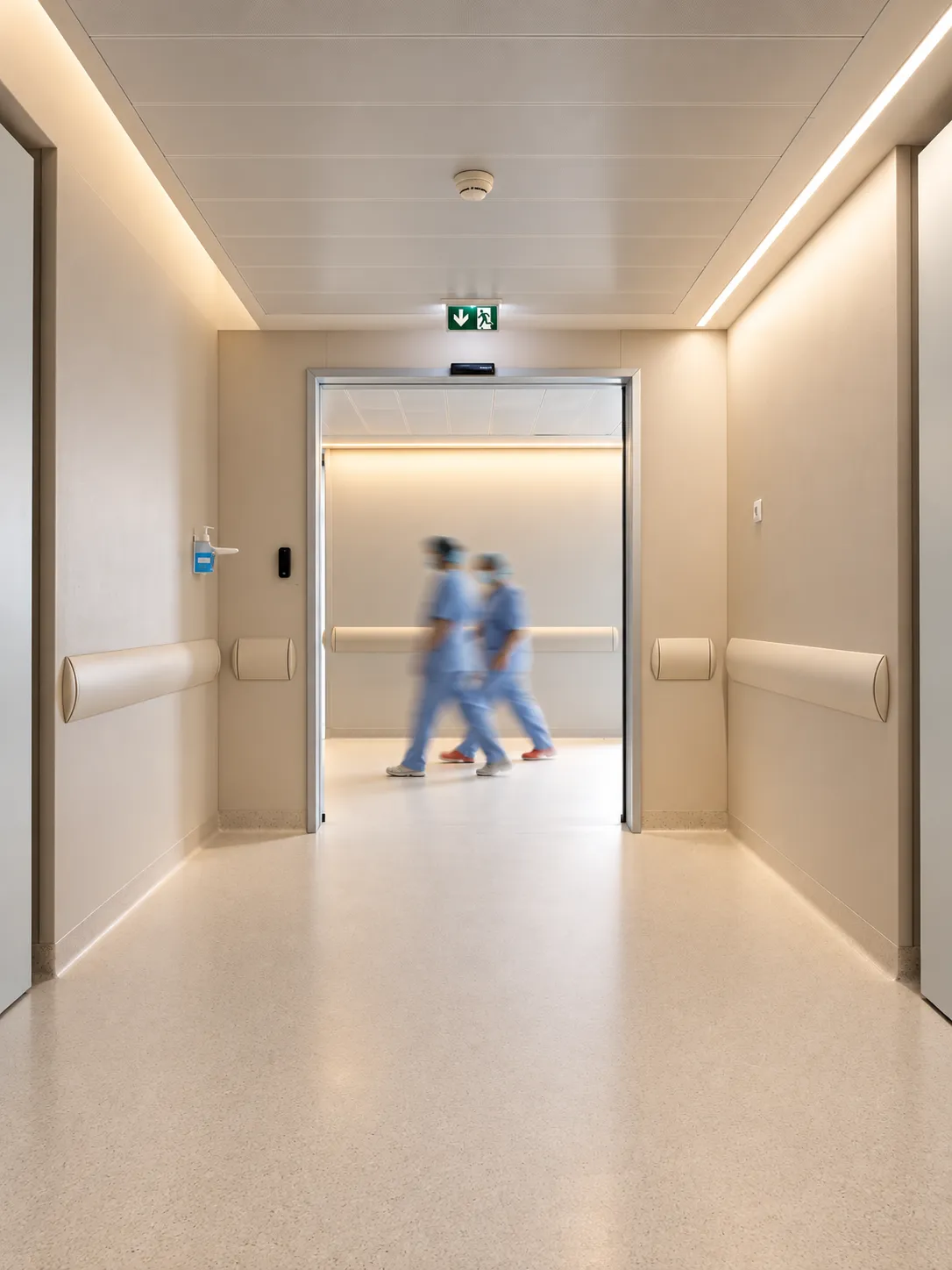
Every space calls for a different environment
- Transit
Corridors
Light follows the rhythm of the day and dims at night, and the system watches for noise peaks that reach nearby rooms.
- Waiting
Waiting rooms
Warm light, soft ambient sound and subtle scents make waiting calmer for patients and families.
- Visits
Family visiting areas
A welcoming space for relatives that reinforces the patient’s familiar cues and makes it easier to be there for them.
- Calm
Calm rooms
Stimuli kept to a minimum, to find peace in the most stressful moments.
- Movement
Rehabilitation rooms
Stimuli that motivate during movement sessions and help patients get going.
The whole unit, on one dashboard
Readings from every space come together in a ward view: the care team sees how light, sound and air evolve across the unit, and where action is needed.
Rooms and common spaces share the same sensors, the same AI engine and the same dashboard.
How the technology works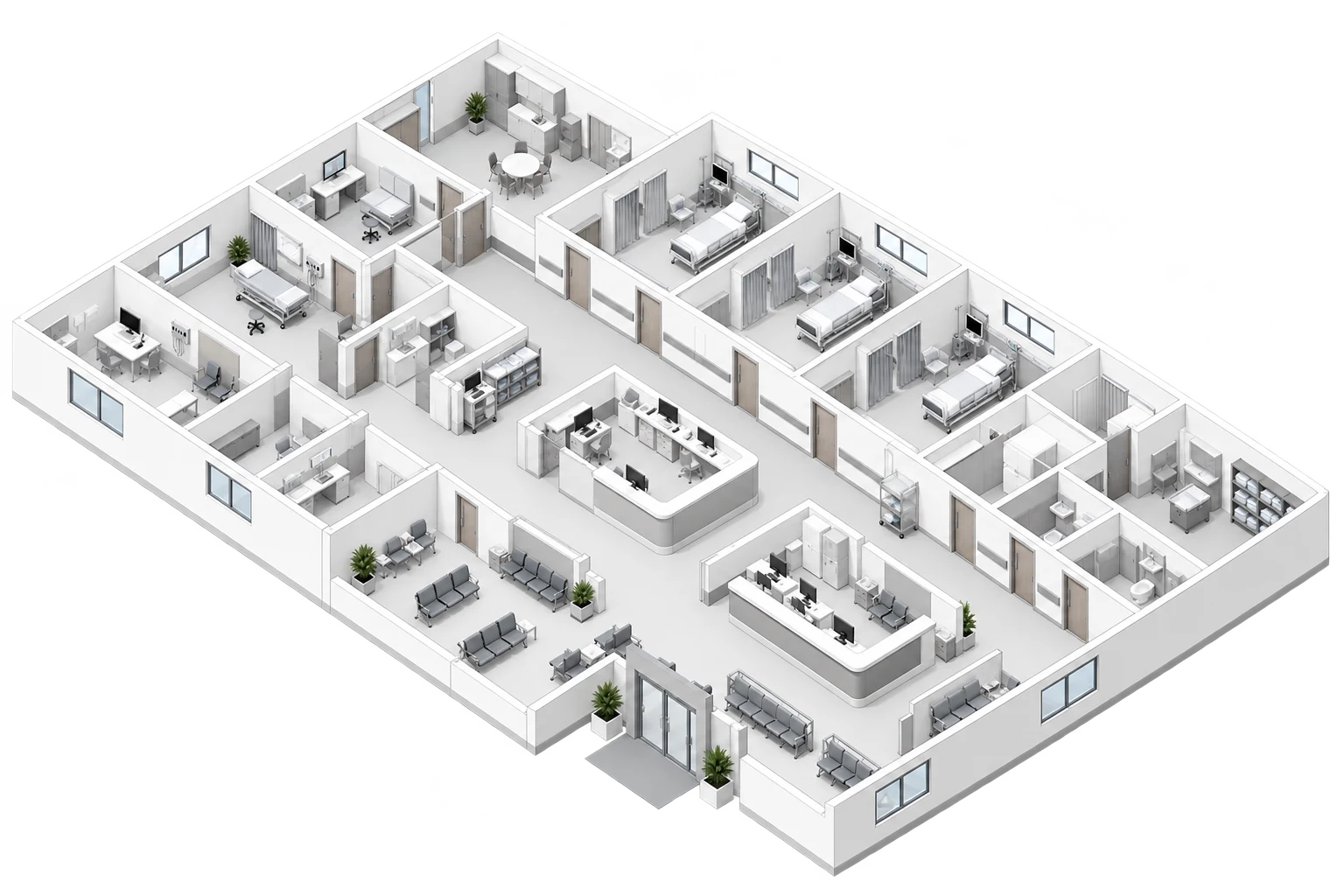
Experiences designed for every space.
Sensory Overload Reduction
Minimizes unnecessary sensory stimulation.
Anxiety & Stress Relief
Supports comfort during stressful moments.
Rehabilitation & Mobility
Supports engagement during movement sessions.
Patient Orientation Support
Reinforces familiar environmental cues.
Family Visiting Moments
Creates welcoming spaces for loved ones.
Quiet Room Experience
Reduces stimulation for peaceful moments.
Frequently asked questions
Why does the environment of common spaces matter?
Noise, poor lighting and too many stimuli don’t stop at the room door. Shared spaces add constant movement and waiting, which can raise stress for patients and families. A calmer environment helps everyone, staff included.
What is sensory overload?
It is the state in which stimuli from the environment, such as noise, light or movement, exceed a person’s capacity to process them. It is especially relevant for older people and people living with dementia.
Does it run on the same system as the rooms?
Yes. Rooms and common spaces share sensors, AI engine and dashboard, so the team gets a view of the whole unit.
Further reading
 Research & insightsWhen the hospital becomes overwhelming: understanding sensory overload
 Research & insightsDementia, agitation and the environment: what do we know about multisensory stimulation?
 Research & insightsAmbient intelligence in hospitals: can the environment anticipate patient needs?
 Research & insightsThe environment as a care variable
 Research & insightsMeasuring invisible distress: practical indicators of wellbeing in hospitals
 Research & insightsCalm is personal: how to tailor sensory interventions safely
Let’s talk about your centre’s spaces
We’ll explain how NeumaCare adapts to each area of the unit.
Let’s talk