
Rooms that adapt to each recovery
A sensing layer built into the room measures light, sound and air, and adapts the environment in real time to each patient’s needs: calmer days, more restful nights.
Let’s talk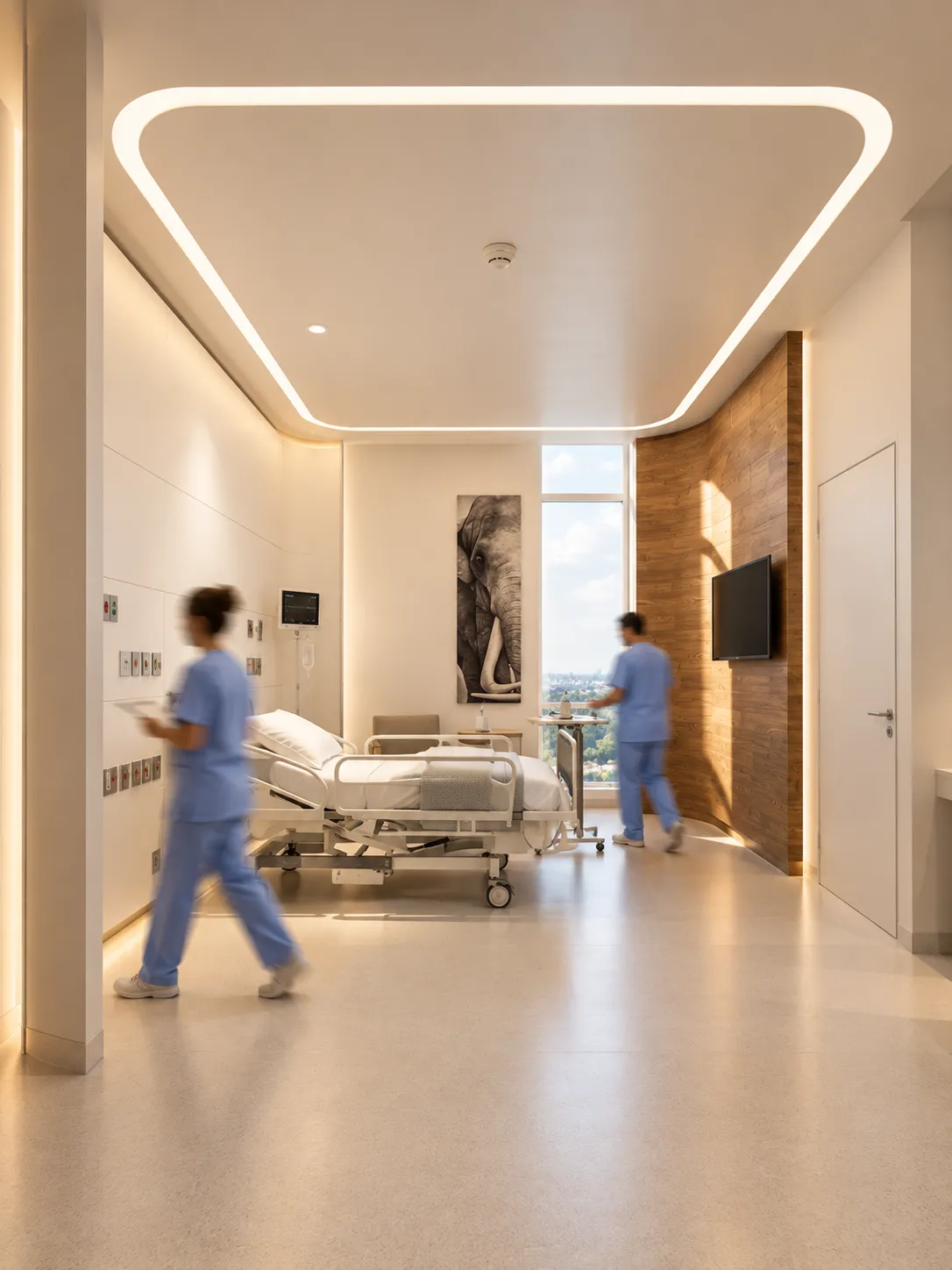
Five layers working together
- Light
Circadian lighting
Lighting follows the day: brighter in the morning to support alertness, warm and low in the evening to prepare for sleep. At night it stays dim so rest isn’t broken.
- Sound
Soundscapes and noise alerts
Soundscapes soften background clinical noise, and the system measures the room’s sound level to flag peaks before they disturb rest or recovery.
- Scent
Aromatherapy diffusion
A diffuser releases subtle scents, such as lavender, in low, controlled doses to support moments of calm and rest.
- Sensors
Environmental sensing
Light, sound and air sensors record the patient’s environment in real time, day and night, and track how it changes.
- Team
Care-team dashboard
Every room’s status, ready for any shift: at a glance, the team sees how the environment is doing and which protocol is running.
An environment that anticipates
- 01
Sense
Continuously picks up signals from the patient, the environment and the context.
- 02
Understand
Interprets the data in real time to understand each care situation.
- 03
Anticipate
Spots patterns and foresees needs before discomfort builds up.
- 04
Act
Autonomously creates sensory experiences tailored to each care need.
Tailored sensory experiences for every care moment.
Different moments of care call for different environments. NeumaCare combines light, sound and scent to create personalized sensory experiences for every patient and context.
Sleep & Night Recovery
Supports deeper rest and calmer nights.
Pre-Procedure Calm
Creates calm before clinical procedures.
Morning Activation
Supports gentle daytime activation.
Circadian Rhythm Support
Aligns sensory cues with natural rhythms.
Oncology Treatment Comfort
Creates calm during treatment sessions.
Anxiety & Stress Relief
Supports comfort during stressful moments.
Post-Procedure Recovery
Promotes calmer recovery environments.
Personalized Sensory Care
Adapts to individual sensory preferences.
Sensory Overload Reduction
Minimizes unnecessary sensory stimulation.
Rehabilitation & Mobility
Supports engagement during movement sessions.
Patient Orientation Support
Reinforces familiar environmental cues.
End-of-Day Wind Down
Prepares the environment for nighttime rest.
Family Visiting Moments
Creates welcoming spaces for loved ones.
Quiet Room Experience
Reduces stimulation for peaceful moments.
Personal Comfort Settings
Adjusts sensory cues to individual needs.
The environment shapes how we feel.
Less stress & anxiety
Calmer environments designed to reduce sensory overload and support emotional wellbeing.
Better sleep & rest
Circadian-aligned lighting and soothing soundscapes that support natural sleep rhythms.
Greater patient comfort
Personalised sensory experiences that create more comfortable and supportive care spaces.
Non-pharmacological
Sensory interventions designed to complement clinical care and potentially reduce reliance on medication.
Frequently asked questions
What is a hospital room with sensory AI?
It is a room where light, sound and scent aren’t fixed: a layer of sensors and devices measures the environment, and an artificial intelligence engine adjusts it in real time to each patient’s needs and to each moment of the day.
Does it replace medical treatment?
No. NeumaCare’s sensory interventions complement clinical care. They are non-pharmacological measures that aim to reduce stress and improve rest, and may help reduce reliance on medication.
Which care settings is it designed for?
Hospitals and care homes: inpatient wards and any unit where the environment weighs on patients’ rest and wellbeing.
Has it been tested in a real hospital?
Yes. NeumaCare ran its first usability test in a real patient room at Hospital Althaia in Manresa, with clinical staff who helped fine-tune the light, sound and scent protocols.
How can I try it at my centre?
Write to us from the contact page and we’ll explain how NeumaCare can be adapted to your centre’s rooms.
Further reading
 Research & insightsThe patient’s body clock: how hospital lighting shapes sleep, mood and recovery
 Research & insightsWhen the hospital never goes quiet: how noise affects patients’ sleep, stress and wellbeing
 Research & insightsSleeping in hospital: which non-drug interventions have the strongest evidence?
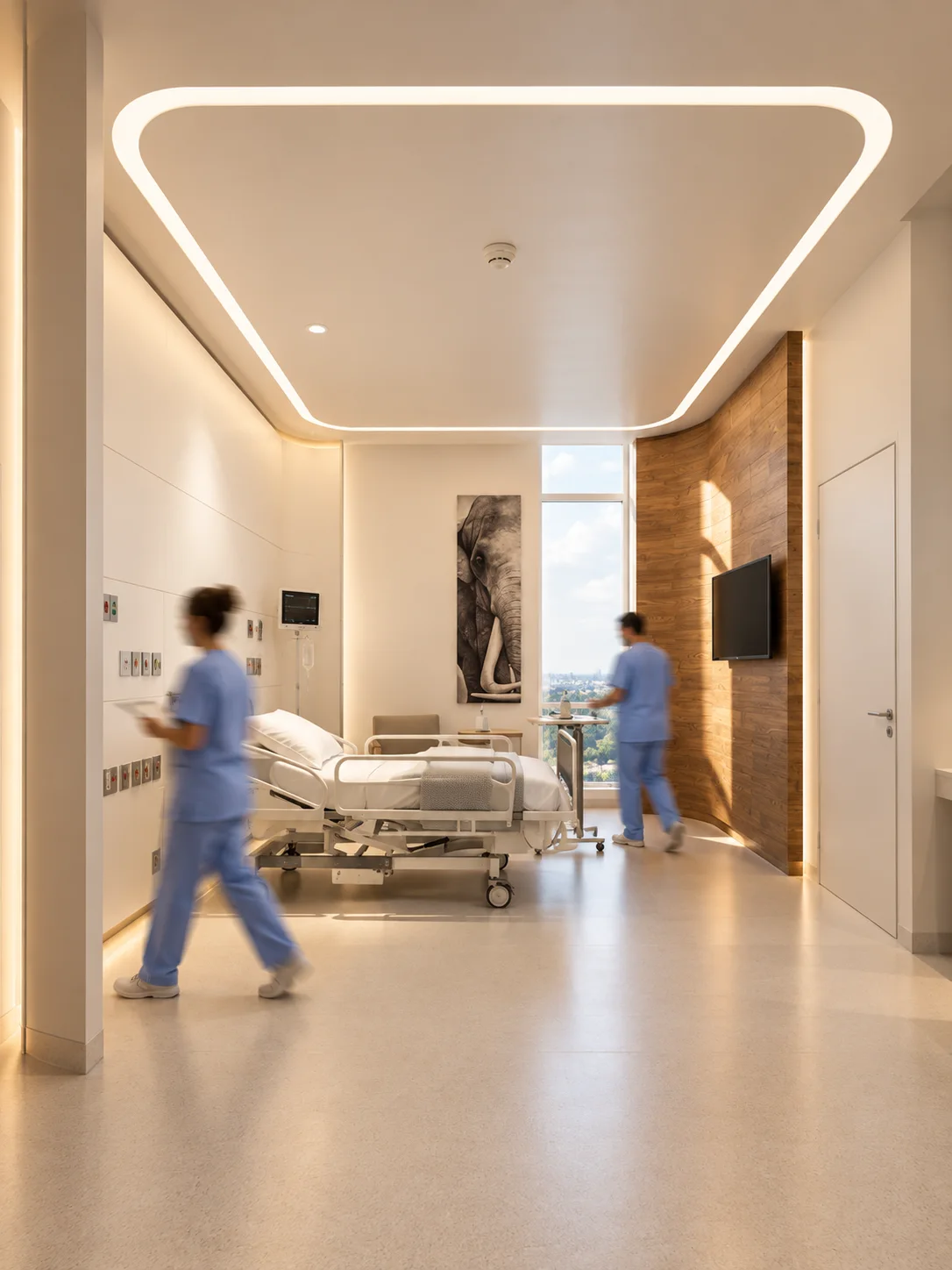 Research & insightsWhat exactly is a patient-centered room?
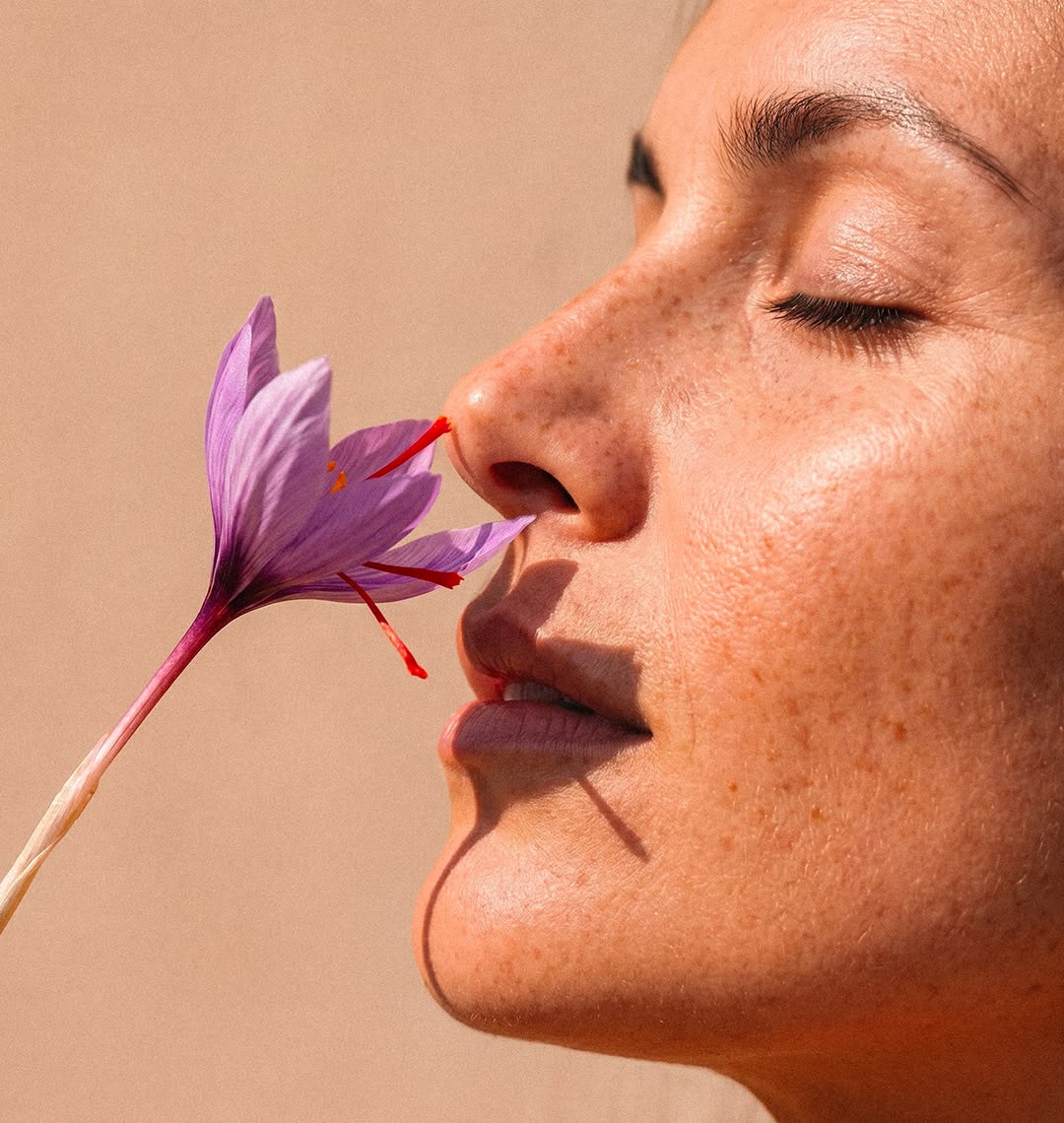 Research & insightsThe Invisible Power of Scent: What Does Science Say About Aromatherapy in Hospitals?
 Research & insightsCan Music Heal? The Science Behind Music Therapy in Hospitals
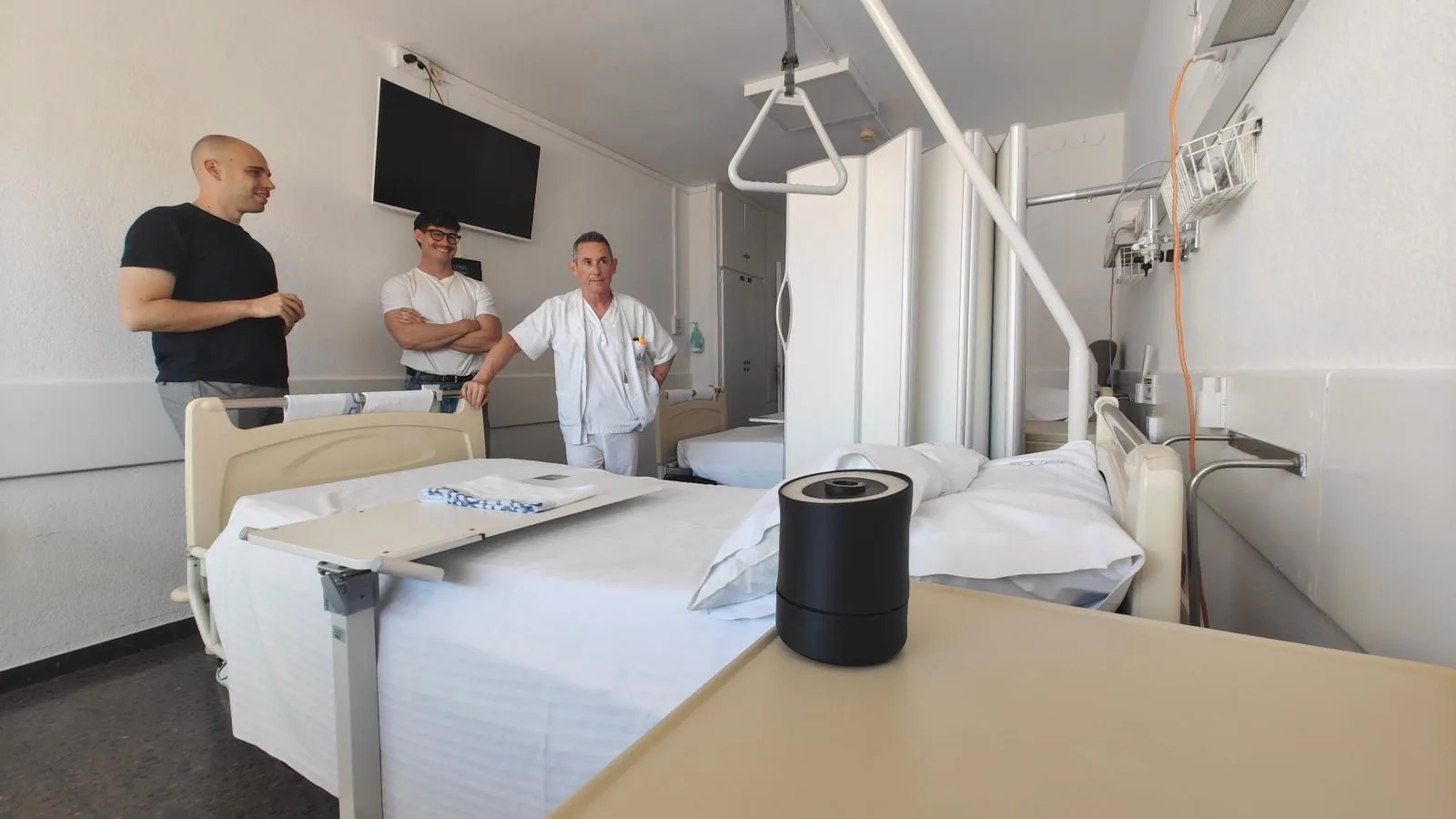 News & MediaNeumaCare's first real-world usability test — at Hospital Althaia in Manresa
Want to see it in one of your rooms?
Let’s talk about adapting NeumaCare to your patients and your team.
Let’s talk